

The internet isn’t just a mirror to other people’s lives anymore — it’s turned into the world’s biggest comedy club. Memes spread faster than breaking news, and your 3 a.m. scroll session? It’s basically an open mic night. Ordinary moments — opening Instagram, accidentally DM-ing your boss, letting your For You Page loop in weird ways — are now comedic material. And believe it or not, the humble knock-knock joke has evolved. It’s been rebooted with algorithm humor, influencer drama, and meme-powered punchlines.
This isn’t just nostalgia — it’s a remix. We’re combining a timeless joke structure with today’s digital quirks. In this post, we’ll explore what makes social media humor tick, break down its different flavors, and even throw in some knock-knocks crafted for our scroll-obsessed generation. So, come on in — we’re knocking on the door of online hilarity.
What Is Social Media Humor — and Why It Hits Differently Now
Social media humor feels less like a written joke and more like a lived experience. It’s compressed, clever, and rooted in the tiny rituals we repeat every day — the pings, the accidental screenshotting, the “seen but never replied.”
Here’s what gives this humor its special spark:
- Relatability: Everyone’s done the “oops, I liked a post from three years ago by mistake” thing.
- In-the-know references: Many jokes land only if you know a platform’s quirks — like how Twitter (or X) handles polls, or how Instagram hides posts.
- Bite-sized formats: A two-line caption or a quick meme can hit harder than a five-minute stand-up set.
- Constant evolution: As new features roll out — say, AI-powered filters or new Reels trends — the humor shifts right along with them.
If you want to lighten your group chat, add personality to your posts, or just laugh at how absurd online life can be — this kind of humor is the perfect toolkit.
The Evolution of Knock-Knock Jokes in the Digital Age
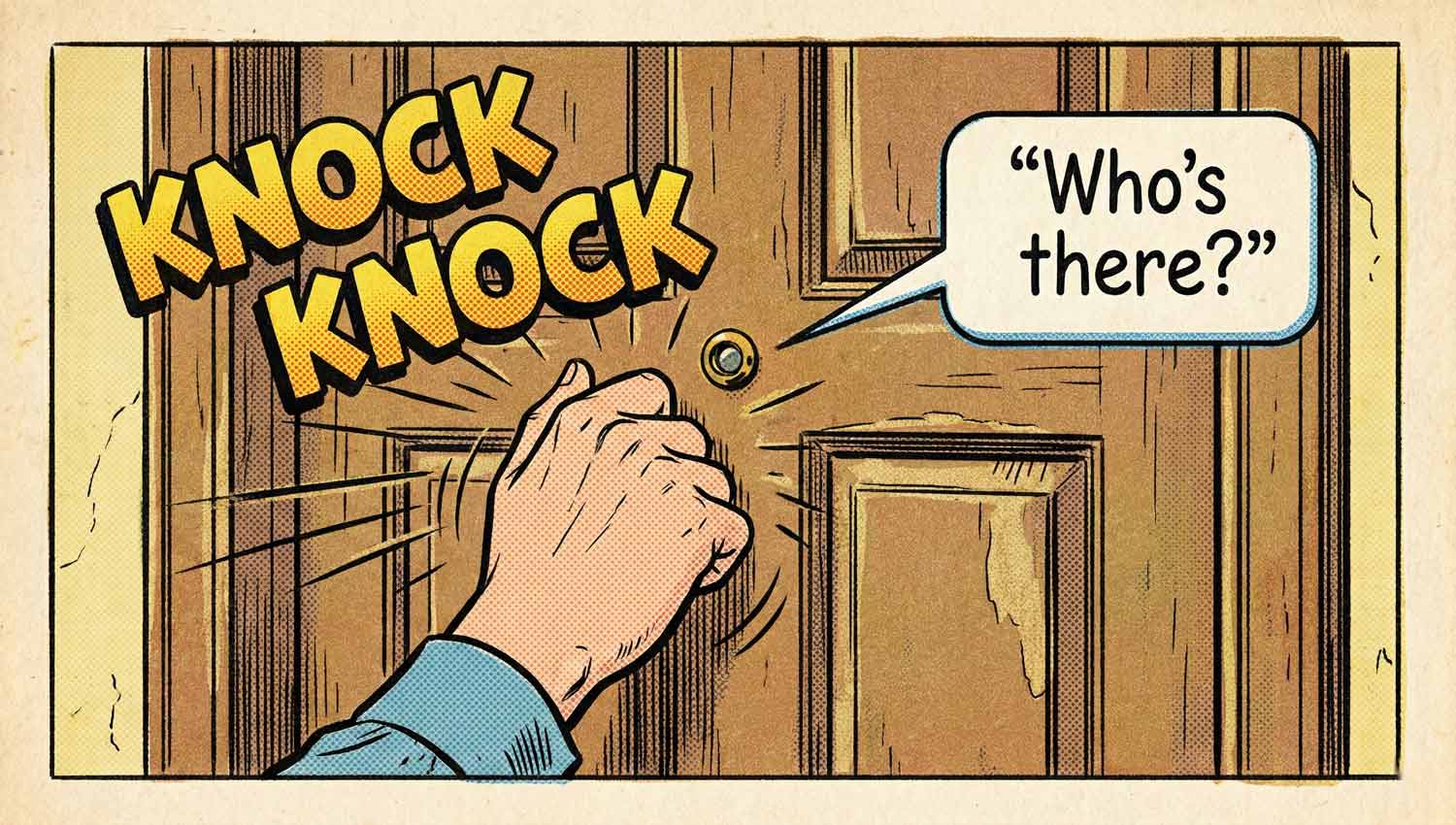
Knock-knock jokes feel like something your grandparents might’ve loved. But on social media, they’ve gotten a glow-up. The same old setup — “knock, who’s there?” — now holds space for memes, algorithms, and influencer drama.
Why this format works so well now:
- Structure you already know: Everyone gets how knock-knocks go. That familiarity gives your joke a soft landing.
- Plug-and-play content: You can slot in any digital trend — from Reels to TikToks to viral audio.
- Built-in surprise: The “who’s there?” moment works like a cliffhanger in Instagram stories or TikTok captions.
- Playful energy: It’s goofy without being dumb — witty and sweet all at once.
So, by mixing childhood joke nostalgia with internet-era references, you get something that’s familiar and fresh.
Categories of Social Media Jokes
Social media jokes come in many flavors. Knowing how to label them helps you use them with purpose — whether you’re memeing, quipping, or just goofing around.
Here are some common categories:
- Classic knock-knock (but make it digital): Traditional structure, modern punchlines.
- Algorithm jokes: Taking jabs at how the feed “knows you too well” — or totally misreads you.
- Influencer / creator jokes: About brand deals, collabs, or the “my life is curated” flex.
- Meme humor: Funny images + text that riff on shared digital experiences.
- Failed-attempt humor: The kind of content people post when they try hard — and it backfires.
- Slang / meta jokes: Using platform-specific lingo or the latest internet slang.
Knock-Knock Jokes with a Social Media Twist
Here are ten modern, social-media–style knock-knock jokes. Drop these in your group chat, story, or comment thread:
- Knock knock.
Who’s there?
Algo.
Algo who?
Algo rhythm your day. - Knock knock.
Who’s there?
Tik.
Tik who?
TikTok — please like me. 😂 - Knock knock.
Who’s there?
Insta.
Insta who?
Instantly regretting my last post. 📸 - Knock knock.
Who’s there?
Snap.
Snap who?
Snap out of it — you’re still scrolling. 👻 - Knock knock.
Who’s there?
Meme.
Meme who?
Meme your dreams, friend. 💫 - Knock knock.
Who’s there?
Reels.
Reels who?
Reels talk — I’m procrastinating. - Knock knock.
Who’s there?
Like.
Like who?
Like… please notice me? 👍 - Knock knock.
Who’s there?
Share.
Share who?
Share your Wi-Fi, I beg. 📶 - Knock knock.
Who’s there?
Thread.
Thread who?
Thread lightly with your opinions. 🧵 - Knock knock.
Who’s there?
Viral.
Viral who?
Viral be famous by midnight. 🚀
They might sound silly, but they tap into real feelings — we all scroll, hope for likes, second guess what we post.

Understanding the Social Media Algorithm: Why It’s So Meme-Worthy
Here’s the thing: the algorithm isn’t just some code. It’s this weird, invisible roommate that watches everything you do — what you tap, hover on, scroll past — and then decides what to show you next.
Why it’s comedy gold:
- Predictable unpredictability: You liked one travel vlog, and now you’re watching urban beekeeping tutorials at 2 a.m.
- Misread signals: The algorithm thinks you’re suddenly obsessed with juice cleanses just because you hovered over one smoothie reel.
- Ad irony: Right after you order takeaway, your feed is full of workout gear promos.
- Silent backlash: When you mute someone, the algorithm marks you as “not interested.” It’s not personal; it’s math.
If you want to steer your feed a little more kindly:
- Be purposeful with your likes.
- Use the “see less / not interested” options.
- Save your real favorites — that tells the algorithm more about what you actually like.
- Clear your watch history or cache now and then.
Think of it like training a puppy: consistent cues help it learn your vibe.

Viral Trends & How They Fuel Joke Fuel
Trends on social media feel like sonic booms — they hit fast, echo everywhere, and spark jokes in their wake. Because humor often follows what’s trending, viral moments become the punchlines almost immediately.
What makes a trend meme-worthy:
- Relatability + timing: It has to feel like something any of us could actually do.
- Playful remixability: People don’t just copy — they twist.
- Simplicity: It’s something easy to replicate, riff on, or distort.
- Critical mass: It needs both creators and regular users to blow up.
Some real-life (2025-style) nods:
- The “Ratatouille Musical” on TikTok started as jokes, but turned into a full fan show.
- Dance challenges spark parody versions five minutes after they go viral.
- A trending audio clip gets looped, remixed, memed — in a day.
- Even algorithm glitches (like weird recs) become memes: “When Spotify thinks I’m a Broadway star.”
If you want to create or ride a trend: pick something that naturally vibes with you, add your twist — even if it’s half-baked or goofy. That’s where the real laughs come from.
Online Personality Types — Who’s Knocking on Your Digital Door?
Not everyone uses social media the same way. Your digital persona shapes how you joke — and how people laugh with (or at) you.
Here are a few personality types you might recognize:
- The Broadcaster: Lives to post. Every moment is content.
- The Observer: Mostly scrolls. Posts rarely, but when they do, it’s meaningful.
- The Meme Archivist: Has a backlog of memes. Their feed is a gallery.
- The Aesthetic Curator: Everything has to “look right” — color palette, vibe, caption.
- The Chaos Poster: Unpredictable. One post is poetry, the next is a rant about Wi-Fi.
When you write jokes — especially knock-knocks — you can match the style to these personas:
- A Broadcaster might share it in their story.
- A Meme Archivist will turn it into a meme image.
- An Observer might quietly send it in a DM or caption.

Social Media Slang — The Secret Language of Digital Humor
Slang is more than just words. It’s the code that makes jokes land. Online, terms like rizz, cap, based, ratio, and de-lu are the punchlines, the setup, and the twist — all at once.
Here’s how slang powers humor:
- It shows you know the inside jokes.
- It condenses complex emotions or commentary into a few syllables.
- It’s remix-friendly: “ratio” can become “ratio’d my sleep schedule,” for example.
Some examples in joke form:
- “No cap, my algorithm is broken.”
- “That was so based — I’m shook.”
- “Stop being so delulu, this saved audio is fire.”
- “You really tried to rizz the algorithm? Bold move.”
When you include slang in your humor:
- Use it naturally (don’t force it).
- Keep it light — too much makes it feel like you’re chasing clout.
- Let it season the joke, not overwhelm it.
Tips for Creating Your Own Social Media Humor
Want to write your own digital jokes (knock-knock or otherwise) that feel real and land well? Here are a few pro moves:
- Tap into shared behavior: Think about your own habits — those times when you screenshot something weird, scroll in bed, or reply and then delete.
- Use the classic structure (if you’re doing knock-knocks): “Knock / who’s there? / … who?” gives a beat people already understand.
- Be self-aware: Meta humor (about creators, algorithms, trends) works really well because it feels smart and rooted in reality.
- Jump on trends, gently: Watch what’s happening — whether it’s a sound, a meme, or a filter — then put your own spin on it.
- Sprinkle in slang — but don’t over-season: Use it where it fits, not just for show.
- Test before you post: Share your joke with a few close friends, or drop it in your story and see what kind of reaction you get.
- Be inclusive: Humor lands harder when people feel seen. Self-deprecating or shared experiences work better than putting others down.
- Tailor for the platform: What works on X might not work in a WhatsApp group or on Instagram Reels.
My Take — Why Knock-Knock + Social Media Are a Perfect Pair
Here’s how I see it: social media + knock-knock jokes = pure comedy synergy.
- You get nostalgia + now: The structure feels childlike, but the punchlines are unapologetically modern.
- There’s balance between structure and surprise: The format grounds you, but the digital twist gives the payoff.
- It’s innocently playful: In a world that’s becoming more serious, these jokes remind us that silliness still matters.
- It’s a small act of connection: When you DM someone “Reels — I’m procrastinating,” you’re not just joking — you’re admitting something human and real.
Final Laugh — Wrapping It Up
Social media humor isn’t just about memes or jokes — it’s a way to connect, reflect, and poke fun at our own digital lives. Whether you’re dropping one-liners in group chats, writing knock-knocks in your stories, or quietly muting the algorithm that knows too much — these moments make the online world feel more human.
Here’s your takeaway:
In a feed ruled by algorithms and fast-moving trends, the oldest jokes still knock — and sometimes, they land the hardest.
Want to try something fun? Write five knock-knock jokes just for your feed. Remix one of the ones above with your own twist. And if you want help brainstorming more — I’m here.



Leave a Reply